Showing posts with label Corinto. Show all posts

Puerto Quetzal, Guatemala. Excursion: Coffee Estate & Antigua

Can you see a face carved out by the weather?
I have been so tired today.  My poor finger was so sore and throbbing once the local anaesthetic had worn off that I hardly slept.

Apart from feeling tired and being sore, the day was enjoyable.

Once we boarded the tour bus Karen, our guide, soon had us all feeling welcome.  Throughout the day she was an excellent guide, very informative, attentive and caring.  She also had a fantastic sense of humour, laughing a lot and always smiling.

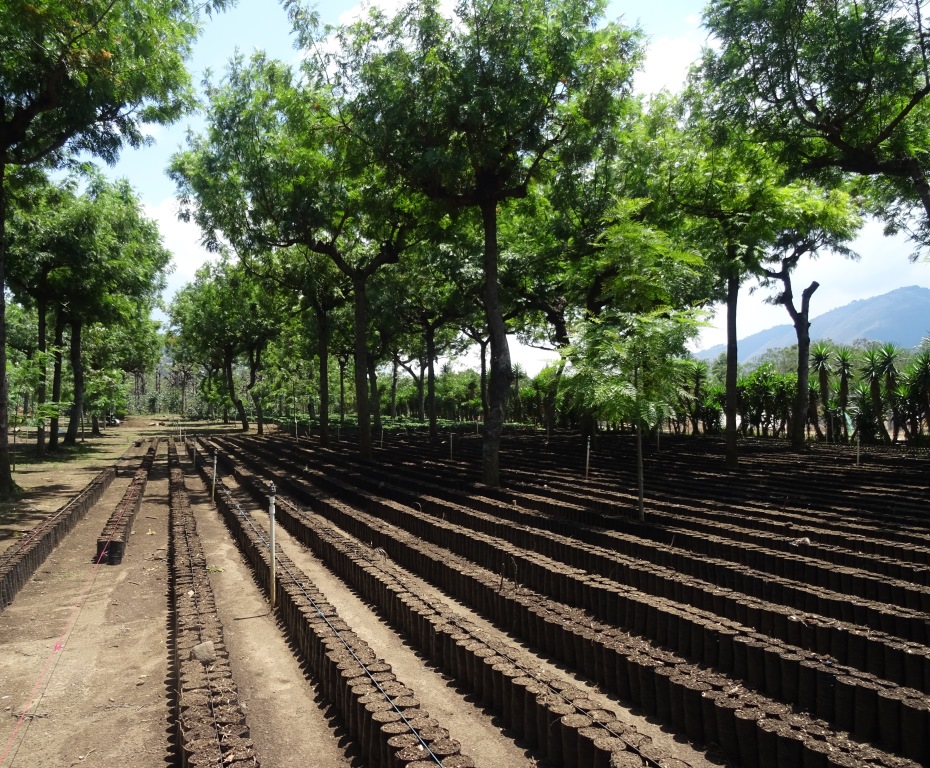
The nursery - coffee beans have been planted
The journey to Filadelfia Coffee Estate was a good 90 minutes but Karen kept us entertained.  I am not a coffee drinker because I don't like the taste.  But I do love the smell of it, oohhhhh....!  So I am glad I had put my name down for the tour as I thought that the tour would be interesting.

The coffee bean dryers
It was near enough midday by the time we got to the coffee estate so we had a nice lunch (with coffee for afters) before we started our tour.  The tour itself was around the coffee plantation and with an explanation of coffee growing - from planting to grafting, growth and gathering of the coffee berries.  Coffee berries at the plantation are gathered by hand rather than by machine because humans can tell which are the ripe berries, machines can't.  If a coffee berry is picked when it is too young, the coffee will be bitter or or poor quality.

Coffee beans drying on the patio
Getting the hair nets on - guests having a laugh!
We were then taken to the processing plant where the berries are processed via the 'wet method'.  During the wet method freshly harvested berries are passed through a pulping machine to separate the skin and pulp from the bean.  The beans are then separated by weight as they pass through water channels. The lighter beans float to the top, while the heavier ripe beans sink to the bottom.  They are passed through a series of rotating drums which then separate them by size.  After separation the beans are put into water-filled fermentation tanks.  They will remain in the tanks for 12 to 48 hours during which time naturally occurring enzymes remove the gooey-like substance that is still attached a parchment-like layer that surrounds the bean itself.  The beans are rinsed by going through more water channels, and are ready for drying.  They are either dried in tumbler drying drums or on the courtyard drying floors.  At the time of taking photographs of the drying drums the flash on the camera died.  There was a sizzle, a popping sound and the smell of smoke ....   After the drying process, hulling machinery removes the now dried parchment-like layer that surrounds the coffee bean.  Next is the grading and sorting of the beans, by size and weight, roasting and packing.  Some companies prefer to roast their own beans so the roasting process is skipped. Before going into the roasting room we had to wash our hands and put hairnets on.  Some of us looked really funny!

Our next part of the day's tour was a trip into Antigua.  Our tour bus had left and was replaced by two minibuses because it is easier for them to drive along the narrow streets in Antigua.  Karen missed two guests in her head count between two transfer mini-busses as we headed from the coffee estate to Antigua.  Fortunately Christian (our guide on the estate) was 'on the ball' and quickly called our driver before we had left the estate gates and we went back to fetch them.  The left-behind guests seemed fine and were laughing.  They accepted Karen’s apology.

The minibus drivers dropped us the town centre near the Jade Museum and we took a short walk to Antigua's main square.  During this time Karen gave us a run-down of the buildings surrounding the square and also of the town's history.  After a wander around the square we were given free time to either explore the town or local market on the square, or simply rest on seats in the shade.  I went with Karen on a short walk, along with 4 or 5 other guests who were interested in seeing a bit more of the town but with a guide.  It was a nice stroll and we were back well in time to meet up with everyone at the square and walk back to the minibuses.  Karen checked and double-checked heads before we headed out of town back to our waiting tour bus on the outskirts of town.

On the way back to port Karen eventually left the guests to their own thoughts until we arrived at the outskirts of the port.  Being a long drive, we were a bit tired.  I was the last person to leave the bus and as I said my goodbyes to Karen and the driver, the driver grabbed my sore hand and gave me a hearty handshake.  I nearly hit the roof, the grasp was firm but so painful on my finger.  I kept my composure until I got back to the cabin - and burst into tears, howling with pain.  Poor Paul....  Later on I went down to the ship's infirmary and got some ibuprofen from Linda, to try and help lessen the swelling and pain.

We were due to dock in Corinto, Nicaragua, tomorrow but unfortunately there is unrest in Nicaragua and therefore it is not safe to visit there at the moment.   So the Maasdam is leaving Puerto Quetzal later than planned today, and will sail slowly overnight and tomorrow to Puerto Caldera, Costa Rica. 


 PHOTOGRAPHS

Filadelfia Coffee Estate


Drying courtyard surrounded by house and processing plant.

The red wall is actually a series of water channels through which the coffee
berries pass, heavier riper beans sink; less ripe ones pass into the
next channel.  The drying tumblers are in the shed with the blue pipes.


Coffee beans drying before the parchment is removed.

In the trays from left to right: coffee beans with their parchment on;  next,
husks that have been removed;  next to that is the coffee beans without
husks on; and right tray, coffee beans have been roasted.

Coffee bean with the parchment taken off


Roasting plant
Husking machinery


Roasting machinery


Packing room and coffee tasting

Christian, our coffee estate guide, with some of the
packaged coffee.


Time to leave the coffee plantation and head to Antigua in the waiting
minibuses.  This is a nice view of the main driveway down through the
coffee estate.

 Antigua


Corinto, Nicaragua. Excursion: Cortijo El Rosario Estate & Equestrian Show

Image may contain: one or more people, people riding horses, horse and outdoor
Equestrian show at Cortijo El Rosario Estate

Another rainy day greeted us when we docked in at Corinto but at least the heat was bearable.  The rain cleared by the time I headed onto the pier to meet up with the tour group I was assigned to but the air felt quite muggy.

The tour I was assigned to was ‘Cortijo El Rosario Estate & Equestrian Show’, something that I looked rather forward to as it is a totally different tour to those which I have done.  Cortijo El Rosari is a 300 year old farm which is well known in Central America for its breeding of pure bred Spanish and Lusitanian horses.

The drive to Cortijo El Rosario Estate took us about 25 minutes and we were welcomed at the venue with a nice refreshing drink.  Prior to the horse show guests could wander around the arena area to see some of the horses in their stables and also see a farrier at work, making a shoe and putting the horse’s hoof.  The arena was wet and muddy due to the recent rain and workers, along with a tractor, were doing their best to clear the water that had collected in the arena.  Unfortunately the drainage pipes had blocked up due to the mud…    The show began.  There was a pole display – a rider used a long pole over and under which his horse moved.  There was a display of beautiful carriages, including small one pulled by a miniature horse.  Two women danced beside and in front of their men’s horses as they moved.  Horses were brought on the arena and showed their leg crisscross skills, different paces and steps, and also balancing on hind legs.  I felt sorry for the horses and their riders – it was not easy to do a show in muddy, slippery conditions but they did very well despite the circumstances.  The dancers’ dresses got quite muddy too.

Whilst waiting for a tractor-drawn carriage to collect our group for the next bit of the tour (a children’s therapy clinic which is on the property) I saw the farrier at work and also went to see some more horses.  In hindsight I could have walked to the children’s clinic instead of taking the carriage – it wouldn’t have been too far to walk.

The children’s clinic, run by the Coen Foundation, is free and caters for those whose parents are too poor pay for treatment.  It offers physiotherapy treatments, play treatment and horse therapy for children with either physical or mental handicaps.  Twice a week children and their mums are picked up by minibus for treatments at the centre.  The treatments and therapies are specific to each child’s needs.  We saw two children on horseback with their therapists, very calm and relaxed.  It was lovely to see.  Sadly there is no hydrotherapy pool.  Currently there are no funds to build one and also water is very expensive.  The staff welcomes feedback and suggestions from professionals as well as volunteers to help them.  The centre also relies on donations to help to continue to provide this valuable service.

At the clinic we met with staff and saw a 10 year old lad having physiotherapy on an outdoor therapy table.  He had been paralysed down his right side since birth and had been having treatment since the age of 2.  The lad’s mother was also with him, keeping him occupied by talking to him but at the same time observing the physiotherapy techniques so that she could continue them at home.  Inside we also saw children drawing and working on their colouring-in books.  The discussion by one of the doctors, translated by our guide, was very interesting as was what the other therapists had to say.

Next we were taken to the Estate’s shop where guests could purchase coffee and gifts.  At the entrance to the shop a gentleman on a rudimentary pottery wheel gave a lovely demonstration of making his pots with clay.  He had taught himself, by trial and error, to make various shapes and sizes of pottery.

Lunch was buffet-style underneath a large circular open air thatched roof.  The filled tortillas were delicious.  Musicians and dancers entertained us while we ate.  It was a lovely atmosphere.  After lunch we had time to explore the property on our own or take a horse carriage ride.  The property is very beautiful and peaceful.  I would certainly say that it would be a place of healing too – there was just something about being there …  I came across the therapy horses, some in their stables, others tied up in the yard.  One of the stable-hands gave me a mango to feed a horse – he walloped it down with great gusto – oh yum!

It was soon time to leave and head back to the ship.  Fortunately the rain held off but it started to drizzle on the way back.

The ship left an hour later than her scheduled departure time.  Two people were missing and the port authorities would not let the ship leave without them – the Nicaraguan government didn’t want to take responsibility for the guests if they got left behind.  Well… when the missing guests rocked up an hour later the captain was not at all pleased nor were the majority of the guests.  They were jeered at and booed when they reached the gangway.  The errant pair will be ‘read the riot act’ in due course but for now they are not at all popular among their fellow guests.  No doubt they will be lying low.  Apparently they said that they had been mugged by guests from another cruise ship.  It could be an unlikely story because they were found in a bar!  It turned out that, when the Maasdam was in Mexico a few days ago, the same guests were also an hour late back to the ship – also been drinking.  Fortunately at that time the Maasdam had to wait for another ship to leave the harbour before it was her turn.  So the late guests made it back just in time before the gangway was drawn up.  If the Maasdam had left on time the late guests would have been left behind.

Life goes on!

Please see my pictures on facebook via this link:  Cortijo El Rosario Estate & Equestrian Show

No automatic alt text available.
Route to our next destination:  Puerto Caldera

Corinto, Nicaragua. Excursion: Finca Emma Banana Plantation & Hacienda San Jernonimo


Another hot, bright day dawned when we arrived in port.  The tour I was assigned to was Finca Emma Banana Plantation.  It was a good 45 minutes’ drive in an air-conditioned minibus and when we got to a height restriction barrier at the plantation our guide had to get off the bus to open the barrier as the roof of the minibus wouldn’t quite make it.  Unfortunately the opening mechanism was stuck fast so our driver got out of the bus to help him.  After a bit of banging on the mechanism with a rock, the barrier could be moved and our guide swung on the high handle of the barrier as it opened.
When we got to our destination we were able to use the toilet prior to walking around the planation but unfortunately one of the two was broken so 21 people using one toilet – it took quite a while!

Eventually we were able to start the tour where we could see the different stages and agricultural practices of banana and plantain production.  From there we went to the processing plant where bananas sprayed with liquid chlorine to get rid of any bugs or fungus.  They are then cut off the main stems and put into a water bath to be rinsed off.  Workers take out the bananas and cut them into bunches of 5 or 6 fingers.  The larger bananas are put in trays, sprayed with glycerine to stop the ripening process and then packed up in boxes, ready to be sent for export.  Smaller bananas are put on a conveyer belt to another area to be boxed and sent to markets.  Apparently Emma Finca is one of the largest exporters of bananas in the world.

Back on the minibus, we were taken just down the road to Hacienda San Jeronimo - a sugar plantation dating back to the 1700s, famous in the colonial era for its production and worldwide export of sugar.  We weren’t here to tour the plantation though.  At the old farmhouse we listened to local music and saw dancers as we had a snack of bananas cooked in 2 different ways, and dried plantain chips with dips.  Plantains look like bananas but they are much longer and more starchy than bananas, slightly bland to the taste.  After having our snack we were free to wander around the farmhouse gardens and visit the on-site shop before heading back to the ship.

The ship has set sail now for Puerto Quetzal, Gatemala.  It is now time to have dinner and relax.  We have been watching episodes ‘Tales of the Unexpected’ by Roald Dahl, and also ‘Foyles War’ in the evenings.

You can see my pictures on facebook via this link:  Excursion: Finca Emma Banana Plantation & Hacienda San Jeronimo

Route to our next destination:  Puerto Quetzal, Gatemala.
  

Ushuaia, Argentina.

While in port today another ship was berthed alongside the MS Prinsendam .  She is almost the 'sister' ship of the Prinsendam becaus...